
Xnhang Solutions for Smooth Motor Startup
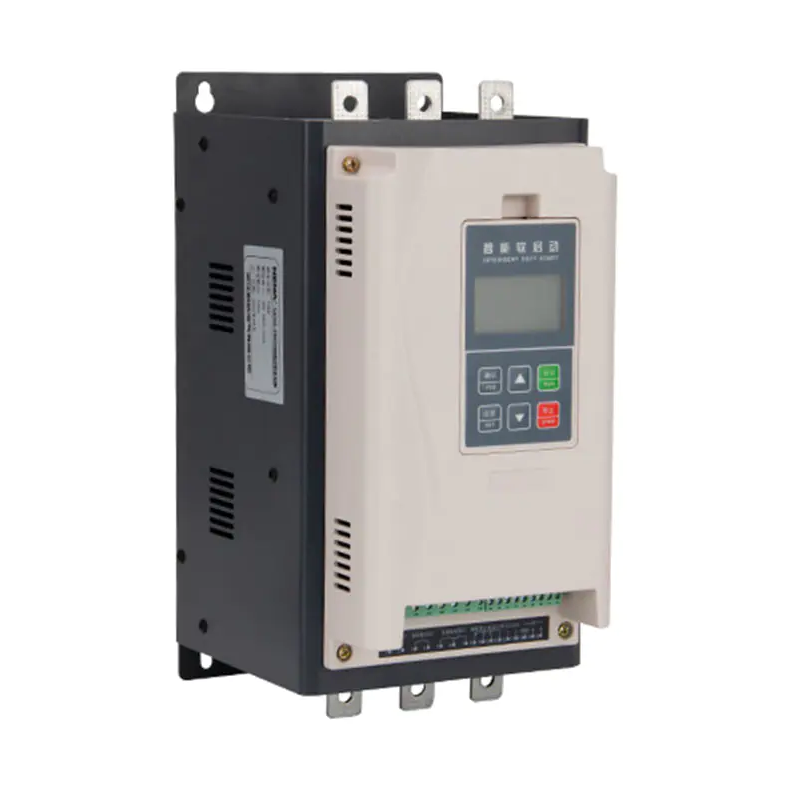
Industrial automation relies on precise motor control technologies that can manage energy flow, reduce mechanical stress, and maintain stable operation under varying loads. In many industrial environments, engineers integrate a Soft Starter into motor control systems to gradually increase voltage during startup, allowing large motors to begin operation smoothly while protecting electrical infrastructure and connected machinery.
Large electric motors often draw an extremely high inrush current when started directly from the power supply. This surge can be six to eight times higher than the motor’s rated current, which may lead to voltage drops, equipment wear, and unnecessary strain on mechanical components such as belts, shafts, and couplings. The working principle behind modern motor starting technology focuses on limiting this initial electrical surge by controlling the voltage applied to the motor windings.
The core of the system lies in semiconductor components—typically thyristors or silicon-controlled rectifiers (SCRs). These devices regulate the amount of voltage delivered to the motor during startup. Instead of instantly applying full voltage, the controller gradually increases it in a controlled ramp. This ramping process ensures that torque builds steadily, allowing mechanical systems to accelerate without sudden shocks or jerks.
From a technical standpoint, the voltage ramp is managed through phase-angle control. By adjusting the firing angle of the SCRs within each AC cycle, the system determines how much of the electrical waveform reaches the motor. As the firing angle decreases over time, more voltage passes through, steadily raising the motor speed until it reaches its normal operating level.
Another important aspect of the technology involves integrated protection features. Modern motor controllers include built-in monitoring for overcurrent, phase loss, overheating, and voltage imbalance. These protective functions prevent unexpected shutdowns and reduce the risk of costly damage to industrial equipment. Engineers often configure these settings according to the characteristics of the motor and the mechanical load it drives.
In manufacturing environments, motor-driven systems power conveyors, compressors, pumps, mixers, and heavy processing equipment. Smooth acceleration is particularly important for equipment that transports materials or liquids, since sudden motion can lead to spillage, mechanical misalignment, or structural stress. Controlled startup helps maintain consistent process conditions while extending the lifespan of both motors and connected machinery.
Industrial operators also benefit from improved electrical efficiency. When motors start gradually rather than abruptly, the power distribution system experiences less stress. Reduced current spikes help maintain voltage stability across the entire facility, which is especially important in factories where multiple large machines operate simultaneously. Stable electrical conditions reduce downtime and support continuous production.
Companies that focus on electrical control equipment have continued to improve the reliability and flexibility of motor starting solutions. Zhejiang Xinhang Electric Co., Ltd., for example, has developed a range of motor control products designed for demanding industrial environments. Their engineering approach emphasizes durable components, accurate voltage control, and adaptable configuration options suitable for different industries.
In sectors such as water treatment, mining, chemical processing, and building automation, controlled motor startup is essential for safe operation. Pump systems benefit from reduced hydraulic shock, while conveyor systems avoid sudden load shifts that could disrupt production lines. By minimizing mechanical impact during acceleration, industrial facilities achieve more predictable operational performance.
Motor starting technologies are also evolving alongside modern digital control systems. Many new controllers include programmable interfaces, communication protocols, and diagnostic features that allow integration with industrial automation platforms. These capabilities enable technicians to monitor startup parameters, adjust performance settings remotely, and maintain efficient operation across complex facilities.
Careful installation and configuration remain essential for achieving optimal performance. Electrical engineers must ensure proper wiring, adequate ventilation, and correct parameter settings based on the motor’s rated power and application requirements. Routine inspection of connections, cooling systems, and control modules further ensures long-term stability.
Zhejiang Xinhang Electric Co., Ltd. provides detailed technical information and product solutions for industrial motor control applications. Additional product specifications and system options can be explored through the company’s official website:
https://www.xnhang.com/product .

 Arabic
 French
 Spanish
 Portuguese
 Deutsch
 Turkish
 Dutch
Dutch
 Italiano
 Russian
 Romaian
 Portuguese (Brazil)
 Greek
Greek