
Inside Rotating Packed Bed Reactor Design
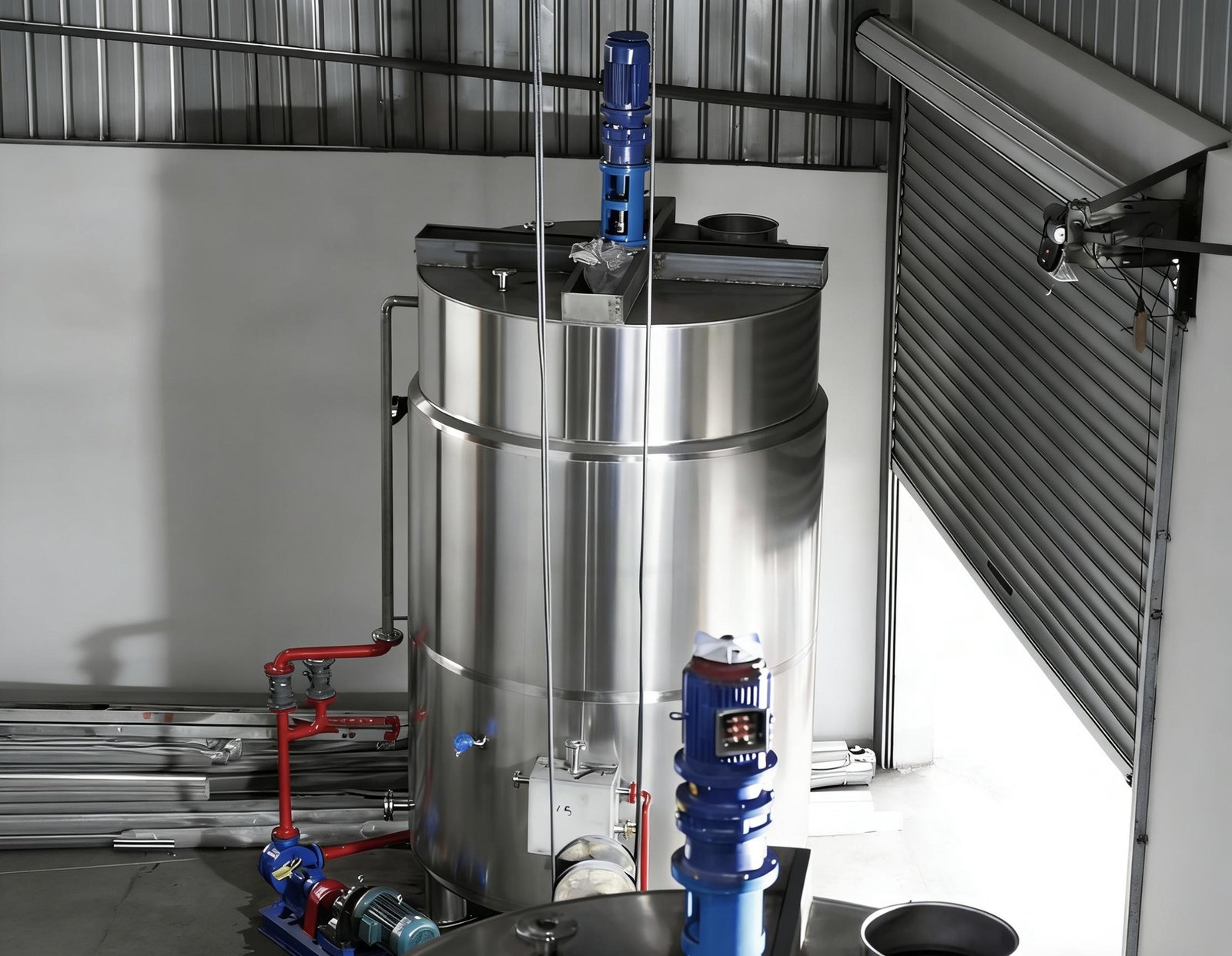
The High-Gravity Reaction System is commonly implemented using a rotating packed bed (RPB), a mechanical structure designed to create strong centrifugal fields for process intensification.
A typical reactor consists of a rotor diameter ranging from 0.1 m to 1.5 m, operating at rotational speeds between 500 and 3000 rpm. The resulting centrifugal acceleration can reach 50–2000 g, depending on geometry and speed.
Inside the rotor, structured or random packing materials such as stainless steel mesh or ceramic rings provide a large surface area, often exceeding 1000 m²/m³. This supports rapid gas–liquid contact and improves reaction kinetics.
Liquid is introduced near the rotor center and flows outward due to centrifugal force, forming thin films that continuously renew at high frequency. Gas flows in counter-current or co-current directions, enhancing interfacial turbulence.
Heat transfer is another critical design aspect. Due to the thin liquid layer and high shear conditions, thermal resistance is minimized, enabling efficient temperature control even in strongly exothermic reactions.
Materials of construction must withstand high mechanical stress, with rotor housings typically designed for stresses above 10–30 MPa depending on scale.
Such engineering characteristics make the High-Gravity Reaction System suitable for continuous chemical production, especially in fine chemicals and specialty materials manufacturing.

 Arabic
 French
 Spanish
 Portuguese
 Deutsch
 Turkish
 Dutch
Dutch
 Italiano
 Russian
 Romaian
 Portuguese (Brazil)
 Greek
Greek