
How to Choose a Brass Shackle Padlock?
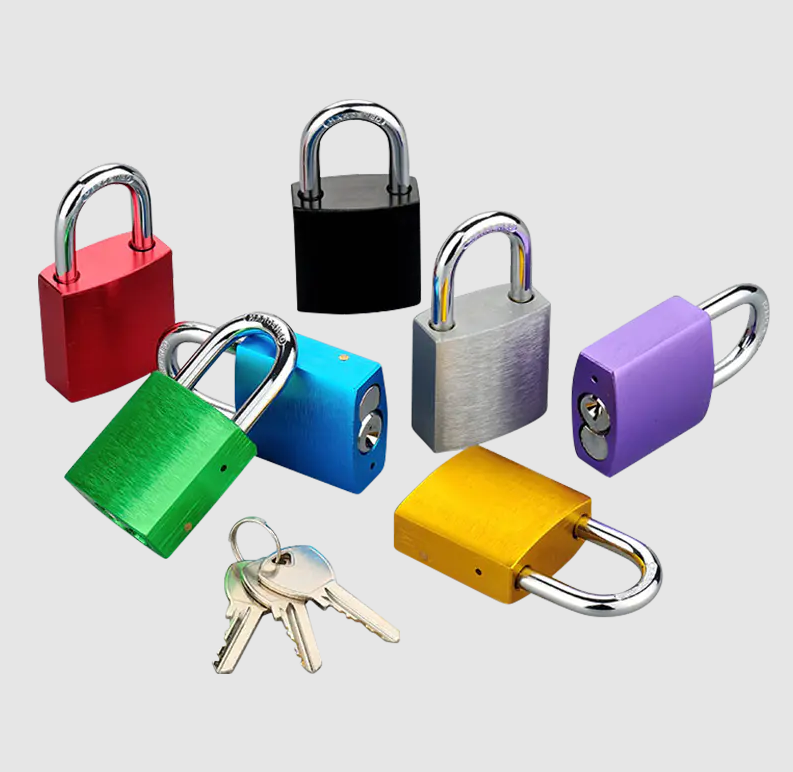
Selecting the right brass shackle padlock depends on matching technical specifications with the intended application. Factors such as body size, shackle diameter, locking mechanism, and environmental exposure all play a role in performance and suitability.
Body Dimension and Structural Stability
The body of a brass shackle padlock is typically manufactured from solid brass alloy, offering stable corrosion resistance and good machinability. Common body sizes include:
20 mm–30 mm: light-duty storage and lockers
40 mm–50 mm: residential gates and sheds
60 mm–70 mm: industrial cabinets and outdoor systems
A larger body usually allows more internal pin space, which can support more complex cylinder configurations and improve key variation capacity.
Brass also provides consistent dimensional stability in humid environments, preventing internal deformation that could affect pin alignment.
Shackle Design and Mechanical Load
The shackle is the most mechanically exposed part of the lock. In a brass shackle padlock, the shackle is usually hardened steel, designed to handle tensile force and cutting pressure.
Typical shackle parameters:
Diameter range: 5 mm–10 mm
Material: hardened steel with nickel or chrome coating
Clearance height: 15 mm–60 mm depending on use case
Locking system: single or double locking structure
Double locking systems secure both ends of the shackle inside the body, improving resistance against twisting and pulling forces.
A thicker shackle generally increases mechanical resistance, but must still match the hasp or chain dimensions to ensure proper installation.
Locking Cylinder Performance
The internal mechanism is a pin tumbler system, which controls how the shackle is released. A brass shackle padlock commonly uses:
4-pin systems for basic configurations
5-pin systems for improved key variation
Anti-pick pin designs in upgraded models
The number of pins directly affects key differentiation and resistance to unauthorized manipulation.
When the correct key is inserted, pins align at the shear line, allowing the plug to rotate and release the shackle. Precision machining inside the brass body ensures smooth pin movement and consistent operation.
Environmental Suitability
Brass is widely used in padlock bodies because of its corrosion resistance. In outdoor environments, exposure to rain, humidity, and dust can quickly degrade steel components, but brass maintains stable performance over time.
A brass shackle padlock is commonly used in:
Outdoor gates and fences
Storage containers
Agricultural equipment rooms
Utility and electrical boxes
Light industrial environments
Some designs also include protective features such as:
Keyway dust covers
Drainage holes at the base of the body
Internal anti-corrosion lubrication
Plated shackles for added surface protection
These features help maintain consistent function under environmental stress.
Usage Fit and Installation Matching
Correct fit is essential for stable operation. Even a high-quality lock may fail functionally if the shackle clearance does not match the hasp geometry.
Key installation checks include:
Vertical clearance must allow full shackle closure
Horizontal clearance must avoid excessive movement
Lock body must not interfere with latch rotation
Shackle should not be overly exposed to cutting tools
Improper sizing can reduce effective security even if the internal mechanism is strong.
Maintenance and Long-Term Operation
One advantage of a brass shackle padlock is reduced maintenance demand compared to steel-bodied alternatives. However, periodic maintenance still improves service life.
Recommended maintenance practices include:
Light lubrication of the keyway
Cleaning dust or debris from shackle area
Checking spring tension consistency
Avoiding prolonged exposure to stagnant water
These steps help preserve smooth pin movement and prevent internal stiffness over time.
Conclusion
Choosing a brass shackle padlock depends on matching structural size, shackle strength, locking mechanism, and environmental conditions. Brass body construction ensures corrosion resistance, while hardened steel shackles provide mechanical strength. When properly selected, the lock offers stable performance across residential, outdoor, and light industrial applications.

 Arabic
 French
 Spanish
 Portuguese
 Deutsch
 Turkish
 Dutch
Dutch
 Italiano
 Russian
 Romaian
 Portuguese (Brazil)
 Greek
Greek