
Which Cars Need Underbody Protection Plate?
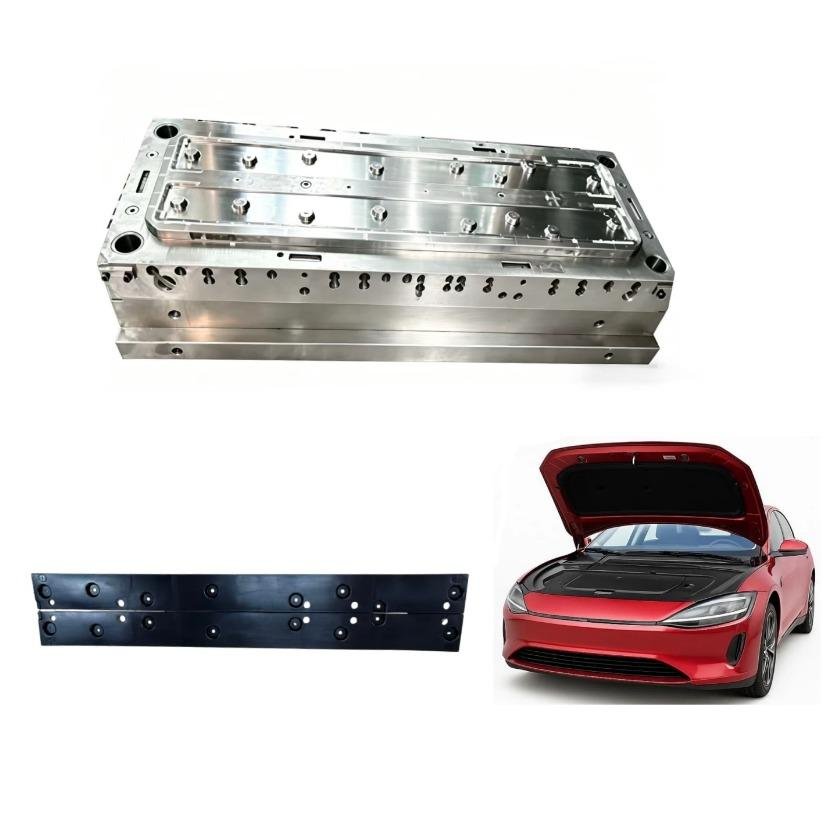
Vehicle architecture has evolved significantly with the introduction of electric drivetrains, battery packs, and integrated chassis platforms. These changes have increased the importance of underbody protection systems across a wider range of vehicle categories.
A Car Underbody Protection Plate is no longer limited to off-road vehicles. It is now widely applied in electric vehicles, hybrid systems, and low-clearance passenger cars to safeguard sensitive components located beneath the chassis.
Electric Vehicle Underbody Structure
Electric vehicles typically place large battery modules along the floor structure. These battery packs are enclosed in sealed housings but remain vulnerable to impact from road debris or uneven surfaces.
Underbody protection plates in EV applications often serve dual functions: impact shielding and structural reinforcement.
Material selection becomes critical due to weight sensitivity. Aluminum alloys are commonly used, with thickness values ranging from 4 mm to 10 mm depending on battery coverage area.
Composite polymer layers may also be added to improve vibration isolation and thermal buffering.
Thermal Management Considerations in EV Systems
Battery systems operate within controlled temperature ranges, typically between 20°C and 40°C for optimal performance. A Car Underbody Protection Plate must not restrict thermal dissipation pathways.
Ventilation channels and thermal interface gaps are integrated into design structures to maintain airflow under the battery pack.
Some designs include thermally conductive coatings that assist in heat dispersion without compromising mechanical strength.
Passenger Vehicle Applications
In conventional passenger cars, underbody protection focuses on engine oil pans, transmission housings, and exhaust routing systems.
Urban environments expose vehicles to speed bumps, potholes, and curb contact. Even low-speed impacts can cause oil leakage or sensor damage if no protection layer exists.
A protective plate reduces direct exposure and distributes force across chassis mounting points.
Material Selection Based on Vehicle Type
Steel plates are often used in commercial vehicles where load durability is prioritized. Thickness values typically range from 3 mm to 6 mm.
Aluminum systems are preferred in passenger and electric vehicles due to weight efficiency. Composite systems are often used in comfort-oriented vehicles where noise reduction is important.
Each system is selected based on structural requirements, energy efficiency targets, and maintenance expectations.
Installation and Integration Factors
Modern vehicle platforms are designed with predefined mounting interfaces for underbody protection systems. This allows integration without modifying structural components.
Torque specifications and mounting geometry are carefully calibrated to avoid stress concentration near battery housings or drivetrain supports.
Clearance control remains essential. A typical gap of 12 mm to 20 mm ensures vibration isolation without direct contact.
Long-Term Protection Benefits
A Car Underbody Protection Plate contributes to long-term durability by preventing gradual damage accumulation. Instead of sudden failures, many underbody issues develop slowly through repeated minor impacts.
Protection systems reduce exposure of wiring harnesses, coolant lines, and sensor arrays. This helps maintain system stability and reduces maintenance frequency over the vehicle lifecycle.
Expanding Role in Modern Mobility
As vehicle platforms continue to evolve, underbody protection becomes a standard structural consideration rather than an optional accessory. Its role expands from mechanical shielding to integrated system protection and efficiency support.

 Arabic
 French
 Spanish
 Portuguese
 Deutsch
 Turkish
 Dutch
Dutch
 Italiano
 Russian
 Romaian
 Portuguese (Brazil)
 Greek
Greek