
Does Temperature Affect IAC Valve Performance?
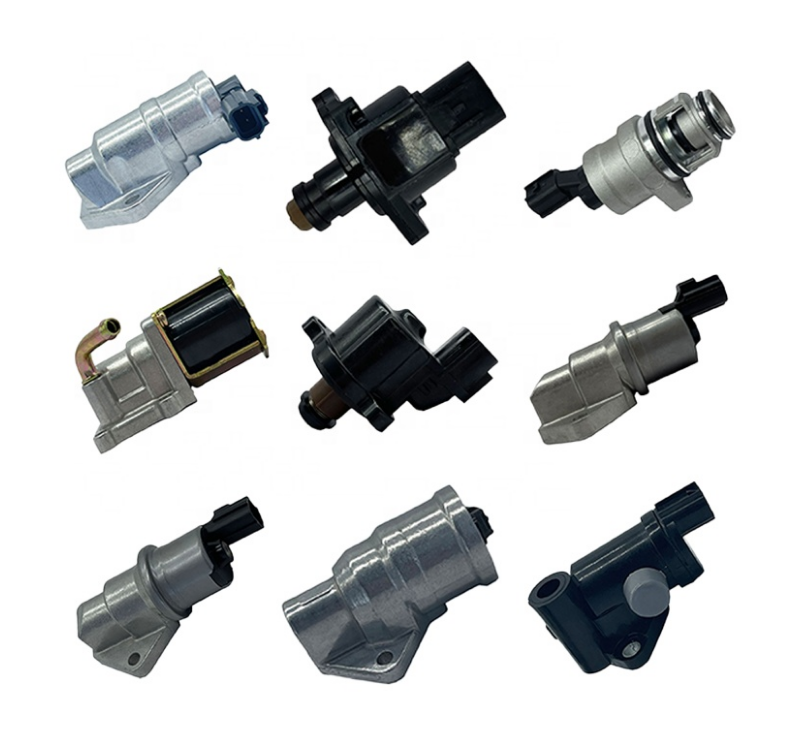
Cold mornings often reveal engine management issues that remain hidden during normal operation. Rough idle, hesitation, or stalling after startup can indicate that airflow regulation is struggling to match engine requirements. The Idle Air Control Valve plays an important role during these moments by adjusting bypass airflow according to changing operating conditions.
Fuel-injected engines require additional air during startup because fuel mixtures are temporarily enriched to improve combustion. Since the throttle plate remains nearly closed, another airflow path becomes necessary. The Idle Air Control Valve provides this bypass route under ECU control. As engine temperature increases, airflow requirements gradually decrease, and the valve adjusts accordingly.
Cold starts create several engineering challenges.
Fuel atomization becomes less efficient.
Lubricating oil is thicker.
Mechanical friction increases.
Electrical loads may be higher.
Combustion stability requires additional airflow.
The ECU continuously monitors sensor inputs and commands the valve to reach appropriate airflow levels.
Typical operating characteristics include:
12V electrical system.
Stepper motor or dual-coil actuator.
Operating temperatures from -40°C to 125°C.
Rapid response to ECU commands.
Precision airflow bypass control.
Stable operation during accessory loads.
Idle speed during startup is intentionally higher than normal operating idle. As coolant temperature rises, engine speed gradually decreases.
Accessory loads add another layer of complexity.
Air conditioning compressors increase engine resistance.
Power steering systems require additional torque.
Alternators work harder during battery charging.
Cooling fans cycle on and off.
The Idle Air Control Valve compensates by increasing or decreasing bypass airflow as needed.
Many Idle Air Control Valve manufacturers design products to handle these repeated adjustments throughout the life of the vehicle.
Drivers may notice several symptoms when valve performance declines.
Cold starts become difficult.
Idle speed fluctuates.
Engine stalls during traffic stops.
RPM changes unexpectedly after accessories engage.
Engine recovery after load changes becomes slower.
Carbon contamination remains one of the primary causes of these problems. Deposits restrict airflow and interfere with pintle movement.
Regular maintenance helps maintain stable operation.
Throttle body cleaning removes deposits.
Air intake systems should remain sealed.
Air filters reduce contaminant entry.
Electrical connectors should be inspected for corrosion.
Vacuum leaks should be repaired promptly.
Environmental conditions also influence performance. Dusty roads, high humidity, repeated short trips, and heavy traffic increase demands on idle control systems.
Manufacturing quality becomes especially important under these conditions.
Idle Air Control Valve manufacturers commonly perform several production tests.
Electrical continuity verification.
Mechanical movement inspection.
Leakage measurement.
Temperature cycling.
Vibration resistance testing.
Repeated actuator cycling.
Material selection contributes to long-term durability. Aluminum housings resist corrosion, while hardened internal shafts reduce wear during repeated movement.
Accurate machining ensures predictable airflow characteristics. Even small dimensional changes can affect idle quality because airflow requirements during idle are highly sensitive.
Replacement parts should match original design specifications for mounting dimensions, electrical connectors, and airflow calibration. Incorrect airflow characteristics may create unstable idle conditions.
Automotive repair professionals frequently inspect surrounding systems during diagnosis. Vacuum leaks, throttle body contamination, damaged sensors, and wiring issues can produce symptoms similar to a faulty valve.
Although many newer vehicles use electronic throttle control systems, a substantial number of engines continue to rely on dedicated idle air control devices. Stable idle operation remains necessary for cold starts, accessory compensation, and low-speed drivability.
Engine operating conditions constantly change, requiring accurate airflow management throughout the driving cycle. Careful material selection, precision manufacturing, and routine maintenance all contribute to reliable performance. Through continuous product development and quality control practices, Idle Air Control Valve manufacturers support aftermarket repair needs and help maintain smooth engine operation across a broad range of vehicle applications.
 Italiano
 English
 Arabic
 French
 Spanish
 Portuguese
 Deutsch
 Turkish
 Dutch
Dutch
 Russian
 Romaian
 Portuguese (Brazil)
 Greek
Greek