
Nante: Industrial surface mounted socket Best Practices for Safe Installations
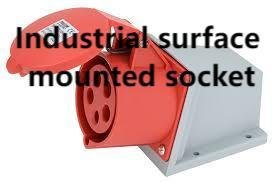
In modern industrial settings, planners often choose robust interfaces where an Industrial surface mounted socket is placed in the middle of equipment runs to simplify power distribution and enable rapid disconnection for maintenance, and selecting the right product from a reputable supplier like Nante helps ensure long-term reliability. This introduction places both the specific device and the manufacturer into context while the following sections explain selection criteria, practical installation steps, environmental protections, verification protocols, and maintenance routines that preserve uptime and safety across complex sites.
Assessing site requirements and load characteristics
Before specifying a surface-mounted power outlet, gather accurate loads and duty cycles. Determine steady-state current, peak startup currents, and the number of simultaneous connections that the system will support. Consider mechanical stresses such as vibration and impact in areas with heavy machinery. Environmental exposures—including moisture, dust, corrosive chemicals, and washdown procedures—drive the ingress protection and material choices. Finally, plan accessibility: whether sockets will be operated frequently or left in a rarely-opened junction impacts lid style, locking, and gasket options.
Mechanical design, materials, and mounting considerations
Surface-mounted sockets must balance ruggedness with ease of installation. Common housing materials include reinforced thermoplastics for excellent electrical insulation and lightweight handling, or stainless steel for demanding abrasive or corrosive conditions. Pay attention to mounting bosses and fastener types; captive fasteners reduce lost parts during service. Provide a mounting surface that is flat and structurally sound—thin panels should be reinforced to prevent cracking. When installing on vertical planes, consider a slight tilt or drip-edge detail to discourage water pooling on tops and around joint seams.
Electrical installation and wiring best practices
Correct wiring ensures safety and long service life. Use conductors sized to the continuous load and account for voltage drop over long runs. Terminations must be torqued to manufacturer specifications; both under-torquing and over-torquing can cause poor contact or mechanical damage. Implement effective strain relief so that cable tension never transfers to the live terminations. Separate power and control wiring to minimize interference, and provide clear labeling on both the socket and its supply feeders. Where multiple sockets serve a circuit, consider individual overcurrent protection to limit fault propagation.
Environmental sealing and protection strategies
Achieving effective weather and dust resistance relies on properly selected seals and entry systems. Choose gaskets rated for the expected temperature range and chemical exposures—EPDM and silicone compounds each have distinct advantages. Use factory-specified gland plates or modular entry kits instead of drilling ad hoc holes that compromise factory-applied coatings and seals. Where washdown is routine, prefer designs with high IP ratings and rounded geometry to allow cleaning without water entrapment. For corrosive atmospheres, opt for materials and finishes specified for chemical resistance to avoid premature degradation.
Commissioning, testing, and maintenance planning
Before putting sockets into service, conduct commissioning checks: continuity, insulation resistance, correct phasing, and earth bonding verification. A thermal scan during initial energization highlights hot spots from loose terminations or undersized conductors. Establish inspection intervals based on usage and environment; more aggressive schedules suit coastal or washdown conditions. During inspections, look for sealing degradation, discoloration, and mechanical wear. Keep essential spares—gaskets, glands, and common fasteners—readily accessible so field crews can restore protective integrity quickly and avoid extended outages.
Surface-mounted sockets are deceptively simple components whose long-term performance depends heavily on correct selection, precise installation, and proactive maintenance. By matching electrical ratings to load profiles, choosing appropriate materials for the environment, and following commissioning and inspection protocols, teams can significantly reduce the risk of moisture ingress, overheating, and mechanical failure. For practical guidance and the manufacturer’s installation recommendations, consult https://www.nante.com/news/industry-news/nante-announces-practical-guidance-for-industrial-surface-mounted-socket-installations.html

 English
 Arabic
 French
 Spanish
 Portuguese
 Deutsch
 Dutch
Dutch
 Italiano
 Russian
 Romaian
 Portuguese (Brazil)
 Greek
Greek