
Durable PVC Tarpaulin Solutions by Shanghai MSD
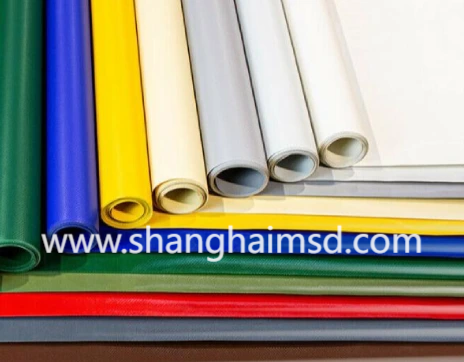
In modern industrial textiles, durability, weather resistance, and processing adaptability define product competitiveness, and Shanghai MSD PVC Tarpaulin Fabric stands at the center of this evolution as a high-performance solution engineered for demanding outdoor and commercial environments. As global infrastructure, transportation, and logistics sectors expand, PVC tarpaulin materials are increasingly required to deliver long-term stability under mechanical stress, UV radiation, and fluctuating climates while maintaining cost efficiency and ease of fabrication.
PVC tarpaulin fabric is fundamentally a composite material consisting of a high-strength polyester base fabric coated or laminated with polyvinyl chloride resin. The reinforcement layer typically uses warp-knitted or woven polyester yarns to provide tensile strength and dimensional stability. The PVC coating, formulated with plasticizers, stabilizers, UV absorbers, and flame-retardant additives, forms a protective barrier that enhances flexibility, waterproofing, and resistance to environmental degradation. The balance between base fabric density (measured in denier or yarn count) and coating thickness determines the final mechanical performance and weight classification of the tarpaulin.
From a processing perspective, two primary manufacturing techniques dominate the industry: knife-over-roll coating and calendaring lamination. In knife coating, a precisely metered PVC paste is evenly spread over the polyester substrate and cured in a controlled-temperature oven. This method ensures strong adhesion between layers and allows customization of surface texture, gloss level, and thickness. Calendaring, on the other hand, involves pressing heated PVC films onto the fabric using high-pressure rollers, producing uniform surfaces suitable for printing or digital graphics applications. Advanced production lines integrate inline tension control systems and thickness monitoring devices to guarantee consistency across large production batches.
Heat welding performance is another defining characteristic of high-quality PVC tarpaulin. Since many applications require seam sealing rather than stitching, the material must exhibit stable thermal fusion properties. High-frequency welding and hot-air welding processes rely on consistent PVC formulation and surface smoothness to ensure airtight seams. The melt flow characteristics of the PVC compound directly influence seam strength, peel resistance, and long-term durability under cyclic loading conditions.
Shanghai MSD International Trade Co., Ltd. has continuously refined its PVC tarpaulin production technologies to address diverse global requirements. By optimizing resin formulations and reinforcing structures, the company delivers materials that achieve a balanced combination of flexibility and structural integrity. In heavy-duty logistics covers, for example, tear resistance and puncture strength are critical, while in architectural membrane structures, dimensional stability and UV aging resistance take priority. Tailored compound adjustments enable adaptation to these different performance profiles.
The primary application fields of PVC tarpaulin fabric are extensive. In transportation, it is widely used for truck side curtains, trailer covers, railway wagon protection, and container liners. In agriculture, the material serves as pond liners, irrigation reservoirs, and crop protection covers due to its impermeability and resistance to microbial growth. The construction sector employs PVC tarpaulin for scaffolding enclosures, temporary roofing, and debris containment systems. Event infrastructure also depends on tarpaulin for tents, exhibition booths, and inflatable structures, where both weather resistance and aesthetic surface quality are important.
Specific performance attributes are verified through standardized testing protocols. Tensile strength and elongation are commonly evaluated according to ISO or ASTM standards using universal testing machines. Tear resistance is measured through trapezoidal or tongue tear methods, simulating real-world stress propagation. Hydrostatic pressure testing assesses waterproof capability by determining the water column resistance level before penetration occurs. UV aging tests expose the material to accelerated weathering chambers to analyze color retention, tensile loss rate, and surface cracking after prolonged radiation exposure.
Flame retardancy is another crucial performance indicator, particularly for transportation and public event applications. PVC tarpaulin can be formulated to meet standards such as B1, M2, or NFPA fire classifications, depending on regional requirements. Flame tests typically evaluate after-flame time, char length, and dripping behavior to ensure compliance with safety regulations. Additionally, cold crack resistance testing determines flexibility at sub-zero temperatures, ensuring that the fabric does not become brittle in winter conditions.
Surface treatments further enhance functional versatility. Anti-fungal coatings protect against biological degradation in humid climates, while acrylic topcoats improve dirt resistance and facilitate cleaning. Anti-static formulations are used in industrial storage environments where static discharge risks must be minimized. Printable surfaces can be engineered for digital ink adhesion, enabling vibrant graphics for advertising banners and promotional installations.
Environmental considerations are increasingly shaping PVC tarpaulin development. Low-phthalate or phthalate-free plasticizers are now integrated into advanced formulations to meet evolving environmental regulations. Recycling initiatives also focus on reclaiming polyester base fabrics and reducing production waste. Shanghai MSD continues to align its production processes with international environmental standards while maintaining performance benchmarks required by global markets.
With the growing demand for resilient protective materials across logistics, agriculture, construction, and event industries, PVC tarpaulin fabric remains a cornerstone of industrial textile innovation. Further technical insights into composition, structural design, and functional advantages can be explored through Shanghai MSD’s detailed material introduction at https://www.shanghaimsd.com/news/what-is-pvc-tarpaulin-fabric.html .
 Spanish
 English
 Arabic
 French
 Portuguese
 Deutsch
 Turkish
 Dutch
Dutch
 Italiano
 Russian
 Romaian
 Portuguese (Brazil)
 Greek
Greek