
How Does Magnesium-Stable Zirconia Ceramics Production Balance Toughness And Thermal Performance
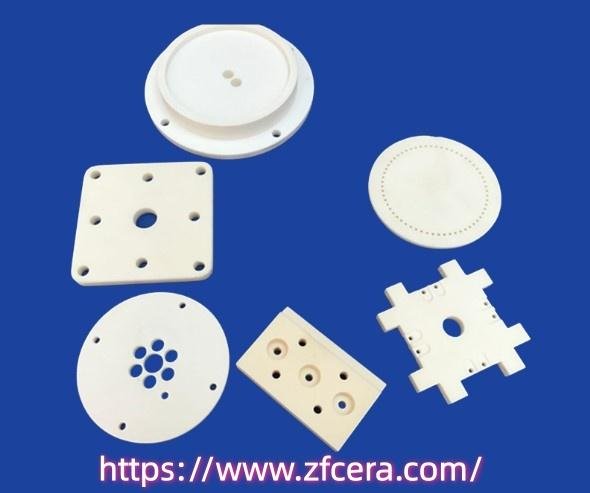
The development of Magnesium-stable zirconia ceramics requires precise production processes to achieve optimal performance across diverse industrial environments. Zhufa applies advanced fabrication techniques to create components with consistent microstructure, mechanical integrity, and thermal resilience.
Production begins with high-purity zirconia powder carefully blended with magnesium oxide. The uniform mixture undergoes pressing into predetermined shapes, followed by controlled sintering at elevated temperatures. The sintering schedule is meticulously designed to prevent excessive grain growth, which could compromise mechanical toughness. A consistent and fine-grained microstructure ensures the ceramics retain strength while resisting crack propagation under operational stress.
Powder quality and particle size are critical for performance consistency. Smaller, evenly distributed particles facilitate densification during sintering and reduce porosity. This densification enhances hardness, fracture resistance, and thermal stability, all of which are crucial for components exposed to high temperatures, mechanical load, or corrosive environments. By carefully controlling these variables, Zhufa achieves ceramics with predictable and reliable performance for critical industrial applications.
After sintering, components undergo precise machining and surface finishing. Grinding, lapping, and polishing are performed with strict attention to avoid microcracks or surface defects. These finishing steps are essential because surface imperfections could initiate failure during operation, particularly in high-stress or high-temperature settings. Zhufa implements rigorous inspection protocols to ensure each part meets stringent quality standards before shipment.
Compared with other stabilized zirconia, magnesium-stabilized ceramics offer a unique combination of advantages. Yttria-stabilized zirconia is known for high toughness, yet magnesium-stabilized variants maintain superior dimensional stability under thermal cycling. The combination of fracture resistance and stable thermal expansion makes these ceramics suitable for applications where components experience frequent temperature fluctuations.
Calcium-stabilized zirconia also differs in behavior. While it can provide hardness, it typically exhibits lower resistance to crack propagation at elevated temperatures. Magnesium-stabilized ceramics sustain structural integrity under challenging conditions, making them preferable for parts exposed to extreme environments. These differences highlight why magnesium stabilization is selected for critical components requiring longevity and reliability.
In addition to mechanical and thermal advantages, magnesium-stabilized ceramics show excellent chemical resistance. They withstand exposure to acids, alkalis, and oxidizing agents without significant degradation. This property is particularly beneficial in chemical processing, energy generation, and manufacturing industries, where contact with reactive substances is common. Combining thermal stability, toughness, and chemical resilience ensures that components operate consistently without frequent replacement.
Manufacturing precision also influences performance consistency. Strict control over material composition, compaction pressure, sintering temperature, and cooling rate minimizes defects and enhances reproducibility. Zhufa's dedication to quality control guarantees that each component performs predictably, which is critical for clients relying on continuous operation and minimal maintenance.
Beyond technical performance, production efficiency is considered. Advanced processes allow for shaping complex geometries, accommodating specific design requirements without compromising strength. Innovations in tooling and thermal management during sintering reduce internal stress, further ensuring component longevity. Such attention to production detail translates into reliable parts capable of enduring repeated mechanical and thermal cycles over extended periods.
By integrating advanced processing methods, careful material selection, and comprehensive quality assurance, Zhufa delivers magnesium-stable zirconia ceramics that balance toughness, thermal stability, and chemical resistance. These attributes make the material ideal for high-performance industrial tasks and specialized applications where reliability, durability, and predictability are essential.
For detailed information and purchasing options, visit https://www.zfcera.com/product/zirconia-ceramics/

 Arabic
 French
 Spanish
 Portuguese
 Deutsch
 Turkish
 Dutch
Dutch
 Italiano
 Russian
 Romaian
 Portuguese (Brazil)
 Greek
Greek