
Laboratory Requirements for Cold Storage Equipment
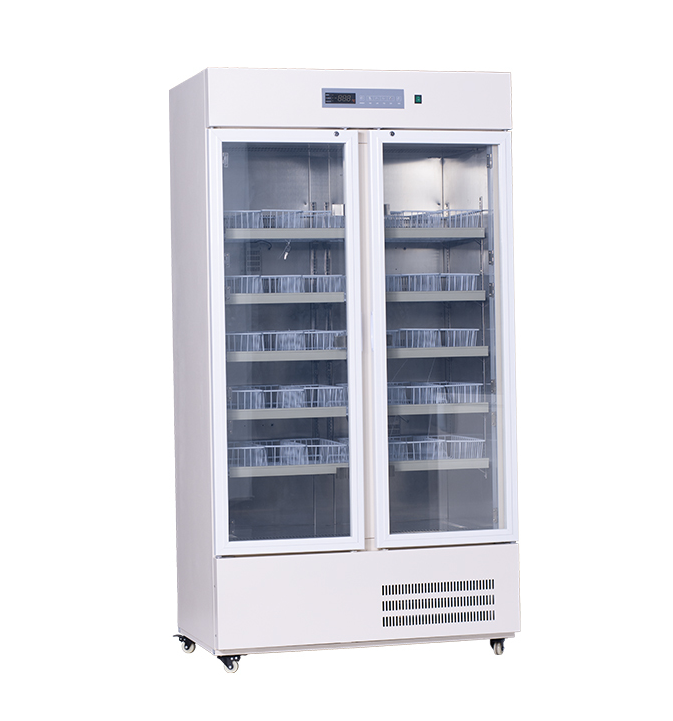
Scientific laboratories depend heavily on controlled temperature environments, where the medical fridge and freezer serves as a core storage infrastructure. These systems are designed to preserve the integrity of biological materials used in diagnostics, research, and pharmaceutical development.
In laboratory applications, refrigerators are typically maintained at 2°C to 8°C, with tight control over internal fluctuations. Many advanced systems limit temperature variation to within ±1°C, ensuring consistency for sensitive reagents and enzymes.
Laboratory-grade freezers are more diverse. Standard models operate at -20°C, suitable for general storage, while research-grade units may operate at -30°C to -40°C. Ultra-low temperature systems reach -80°C, commonly used for long-term storage of RNA, DNA, and cell cultures.
One of the key engineering considerations is uniform temperature distribution. To achieve this, units use forced-air circulation systems combined with strategically placed evaporators. This ensures minimal temperature gradient between upper and lower compartments.
Storage capacity is measured in liters, typically ranging from 100L compact units to over 1000L large-capacity systems. The usable net volume is often slightly lower than gross capacity due to insulation and internal components.
Monitoring systems are integrated into most modern units. These include digital displays, alarm modules, and sometimes remote monitoring via network connectivity. Temperature logs are often recorded at intervals of 1–10 minutes, depending on system configuration.
Energy efficiency is also a focus area. High-efficiency compressors reduce power consumption while maintaining stable cooling cycles. Some systems include adaptive defrost cycles that minimize temperature disruption during operation.
The medical fridge and freezer also incorporates safety mechanisms such as door lock systems, alarm thresholds, and redundancy cooling systems in higher-end models.
These technical features ensure that laboratory samples remain stable throughout storage periods, reducing variability in experimental outcomes.
 Dutch
Dutch
 English
 Arabic
 French
 Spanish
 Portuguese
 Deutsch
 Turkish
 Italiano
 Russian
 Romaian
 Portuguese (Brazil)
 Greek
Greek