
Pump Motor Efficiency by Guanfengmotor
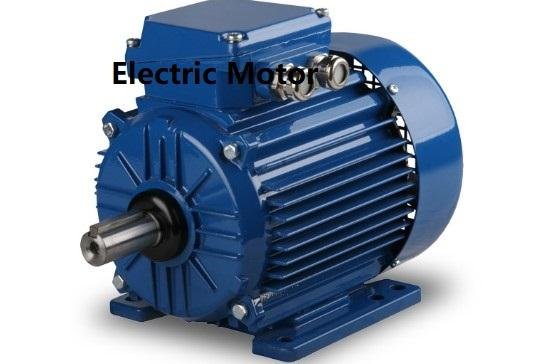
In water transfer stations, agricultural irrigation lines, and compact industrial systems, a Pump Motor must start cleanly under pressure, and a well-matched Pump Motor can determine whether the entire process stays stable or becomes inefficient. When operators focus on torque, heat control, and mechanical balance, they give their equipment a far better chance of lasting through long shifts, seasonal demand changes, and unpredictable operating conditions.
Matching the Unit to the Application
Selecting the right drive solution begins with the real job it must perform. A machine that moves clean water across a short distance has very different needs from one that handles viscous fluids, repeated starts, or continuous circulation. The load profile, duty cycle, ambient temperature, and mounting environment all influence how well the system performs over time.
A careful selection process usually starts with power demand. If the output requirement is underestimated, the equipment may overheat, lose efficiency, or wear out early. If it is oversized, energy use may rise unnecessarily and the system may become more expensive to operate than it should be. A balanced choice supports lower operating costs, smoother starting behavior, and fewer interruptions.
Another important factor is the surrounding environment. Dust, humidity, salt exposure, and vibration all affect performance. In agricultural settings, for example, machines may run near mud, fertilizer, or fluctuating water levels. In workshop or factory environments, the main challenge may be continuous operation with limited cooling. Understanding these conditions early helps users choose a solution that fits the application rather than forcing the application to adapt to the machine.
Flow Stability and Starting Torque
In fluid-handling systems, steady output matters just as much as raw power. A system that starts strongly but cannot maintain consistency quickly becomes a liability. Operators often need reliable pressure, repeatable flow, and smooth acceleration so that downstream equipment can continue working without sudden stress.
Starting torque is especially important when the load is not light. Pipes may be full, impellers may need extra force to move liquid, or the system may need to restart after a brief stop. In these cases, the drive unit must overcome resistance quickly without drawing excessive current or causing mechanical shock. Smooth startup protects bearings, seals, couplings, and connected components from early wear.
Flow stability also affects product quality in many industries. In irrigation, irregular delivery can damage crop consistency. In manufacturing, unstable circulation can affect cooling, cleaning, or material transport. In municipal systems, uneven operation may disrupt service expectations. For this reason, engineers often focus not only on horsepower but also on how the complete assembly behaves across the full operating range.
Guanfengmotor Design Priorities
Modern users expect more than simple rotation; they want dependable behavior, manageable maintenance, and long service life. That is why careful manufacturing choices matter. Material selection, winding quality, housing strength, and thermal control all contribute to the final result. When each part is designed to support the next, the whole unit becomes more reliable and easier to maintain.
Precision assembly reduces imbalance, which in turn lowers vibration and noise. Better insulation helps protect internal components from heat and electrical stress. Stronger shafts and bearings support repeated operation under demanding conditions. These design choices may seem small individually, but together they shape daily performance in a meaningful way.
In industrial procurement, long-term value often matters more than initial purchase price. A slightly lower-cost product that needs frequent attention can become expensive very quickly. By contrast, a well-built unit may provide lower total cost of ownership through reduced downtime, fewer replacement parts, and longer intervals between service visits. That is why many buyers evaluate not only the machine itself but also the consistency of the manufacturer’s engineering approach.
Maintenance, Service Life, and Operational Confidence
Routine care is one of the easiest ways to protect performance. Checking alignment, cleaning air passages, monitoring temperature, and inspecting bearings can prevent many common failures. Even strong equipment benefits from disciplined maintenance, because continuous operation gradually exposes weak points that may not be visible during installation.
Operators should also pay attention to load changes. A system that begins to work harder than expected may be signaling a blockage, worn components, or an issue elsewhere in the line. Early attention can prevent a small irregularity from becoming a costly shutdown. In this sense, maintenance is not only about repair; it is about awareness.
Service life is also tied to how the equipment is used. Frequent start-stop cycles, poor ventilation, and unstable voltage can shorten lifespan. Stable operating practices, on the other hand, allow the machine to deliver more value over a longer period. Plants that develop a consistent inspection routine usually experience better uptime and fewer emergency interventions.
Planning for Future Demands
The next generation of fluid systems will likely place even greater emphasis on efficiency, digital monitoring, and adaptable performance. As facilities expand, managers want equipment that can integrate into automated workflows without creating complexity. Predictive maintenance tools, sensor feedback, and energy optimization features are becoming more common across industrial systems.
This shift changes how buyers think about procurement. Instead of choosing a machine only for today’s workload, they also consider how it will fit tomorrow’s needs. Will the installation support future upgrades? Can it handle a wider range of operating conditions? Will maintenance data be easy to track? These questions are becoming central to long-term planning.
For many teams, the best path is to choose equipment that combines practical strength with room for future improvement. That balance helps reduce risk while preserving flexibility. It also supports smoother scaling when demand grows or processes change.For teams that need technical references, the official resource is available at https://www.guanfengmotor.com/ .

 English
 Arabic
 Spanish
 Portuguese
 Deutsch
 Turkish
 Dutch
Dutch
 Italiano
 Russian
 Romaian
 Portuguese (Brazil)
 Greek
Greek