
The Next Generation of Electronic Packaging: Ultra-Thin Substrates
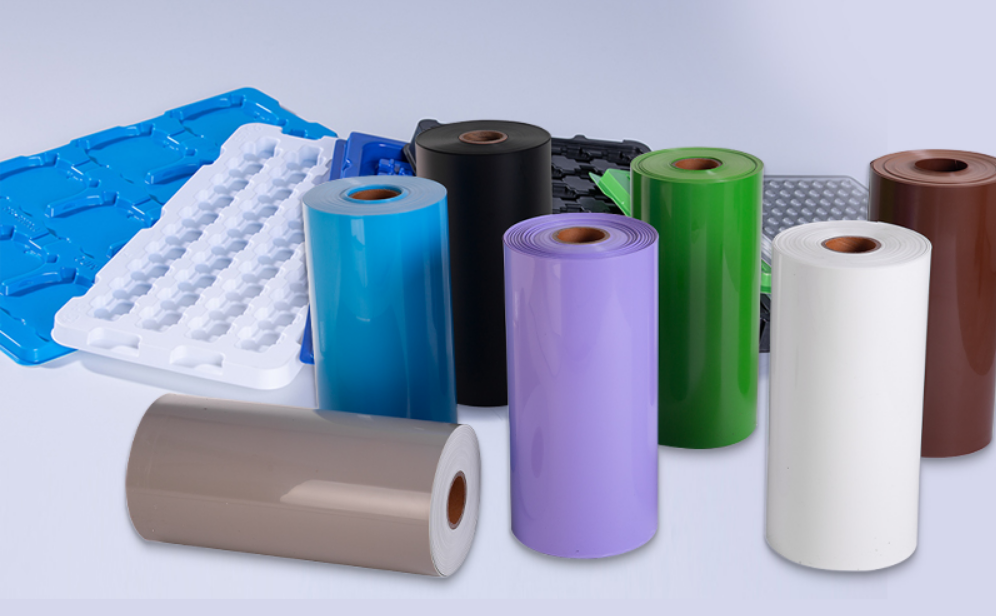
The drive toward miniaturization is forcing a complete re-evaluation of the materials used in electronics packaging. With the rise of 0201 components (0.6mm x 0.3mm) and Wafer Level Chip Scale Packages (WLCSP), the tolerance for error is zero. Traditional materials are hitting their physical limits. Consequently, the demand for advanced Sheets for carrier tape—specifically designed for ultra-precision forming—is increasing rapidly.
For components measuring 1mm x 1mm or smaller, standard pocket tolerances of +/- 0.05mm are no longer acceptable. Newer grades of Sheets for carrier tape are engineered to achieve pocket dimensional tolerances of +/- 0.03mm -6. This requires a material with a very low melt flow index during the extrusion process, ensuring uniform thickness across the entire width of the sheet (typically 8mm to 108mm wide). A variance of just 0.01mm in the sheet thickness results in a loose pocket that allows the component to "flip" or "rotate" during shipping.
Another frontier is sustainability. The industry is actively seeking ways to reduce waste. Since carrier tape is a single-use plastic, the focus is shifting to recyclable core layers. We are seeing the emergence of Sheets for carrier tape with a "VRV" structure—a recycled PET core layer sandwiched between virgin resin layers. This maintains surface cleanliness (no contamination from recycled pellets) while reducing the carbon footprint of the packaging. However, engineers must verify that the recycled core doesn't compromise mechanical strength; the tensile modulus of the sheet must remain stable, often requiring specific additive packages to maintain rigidity.
Furthermore, as autonomous driving sensors (LiDAR, radar) require larger, heavier components, the substrate needs to handle heavier mass without sagging. This has led to the development of high-rigidity PS sheets with a thickness range of 0.3mm to 0.5mm specifically for large connectors and shielding cans. The future of Sheets for carrier tape lies in "application-specific" formulations—moving away from one-size-fits-all rolls toward engineered substrates designed for a specific component’s mass, lead count, and sensitivity.
 Deutsch
 English
 Arabic
 French
 Spanish
 Portuguese
 Turkish
 Dutch
Dutch
 Italiano
 Russian
 Romaian
 Portuguese (Brazil)
 Greek
Greek