
Streamlining Workflows with Smart Consumable Storage
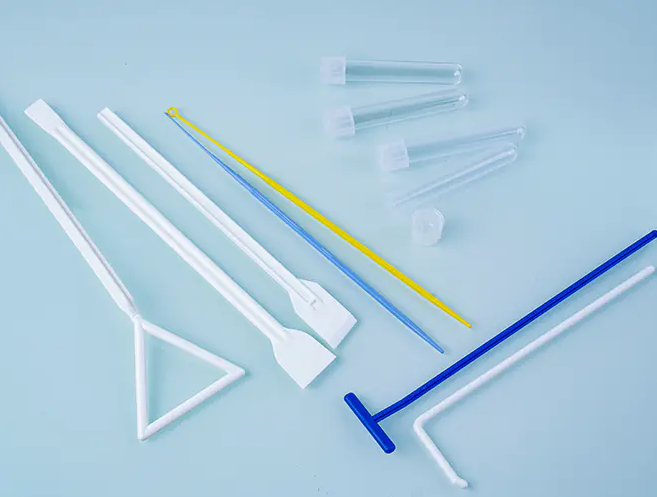
In a busy testing facility, time is the most expensive reagent. While automation has sped up analysis, the physical handling of Microbiology Lab Consumables often remains a bottleneck. Cluttered benches lead to mislabeled tubes, and inefficient storage leads to broken plates or expired media. Optimizing the physical organization of consumables can reduce setup time by 15-20% and significantly lower cross-contamination risks. Here is how to rethink your storage and handling protocols for plasticware and glassware.
First, consider the "buffer zone" concept. Unpackaged consumables should never be stored directly next to active cultures. Implement a color-coding system for racks and containers. For instance, use red bins for waste-only items and blue bins for sterile, ready-to-use Microbiology Lab Consumables. When dealing with items like 96-well plates or deep-well blocks, vertical stacking is efficient but risky. Look for stackable racks made of stainless steel or autoclavable plastic that allow air circulation. For petri dishes, specialized racks (like the PetriPile style) can hold up to 36 dishes of a 90mm diameter, allowing for easy single-hand retrieval without disturbing the stack's stability.
Second, address the "open air" time. Every second a sterile plate is exposed to non-HEPA filtered air is a contamination risk. Utilize resealable bags for items like inoculating loops and cell spreaders. Many manufacturers now offer packaging that is not only gamma-irradiated but also features a zip-lock closure, allowing you to remove half a bag of loops without exposing the remaining 50 to the environment. For liquid handling, filter pipette tips are a crucial subset of Microbiology Lab Consumables. These contain a hydrophobic barrier (usually polyethylene) that prevents aerosols from contaminating the pipette shaft. While standard tips are cheaper, using filter tips for PCR or virology work prevents false positives. The technical spec to look for is the "aerosol-tight" certification, which ensures that even under back-pressure, no liquid reaches the pipette.
Waste management is the final frontier of efficiency. Used slides, contaminated swabs, and empty media bottles pile up quickly. A high-quality biohazard bag must pass the 165°C/329°F impact test (ASTM D1922) to ensure it doesn't puncture during autoclaving. For sharps disposal (broken glass, needles), rigid-walled containers with a one-way drop system are non-negotiable. When selecting these Microbiology Lab Consumables for waste, pay attention to the autoclave compatibility label; some plastics melt at 121°C, turning into a solid brick in your sterilizer, while others are designed to withstand the heat without deforming.
Lastly, implement a Kanban system for your consumables. Define a minimum par level. For example, if you use 100 culture tubes per day, order new stock when you drop to 500. Use shelf labels that indicate the lot number and expiration date facing outwards. Expired Microbiology Lab Consumables (especially sterile items with porous packaging) can lose their sterility over time as the packaging degrades. By treating your storage room with the same rigor as your biosafety cabinet, you ensure that the right tool is always sterile, accessible, and ready for the next sample.

 English
 Arabic
 Spanish
 Portuguese
 Deutsch
 Turkish
 Dutch
Dutch
 Italiano
 Russian
 Romaian
 Portuguese (Brazil)
 Greek
Greek