
Achieving Carbon Neutrality with Biomass
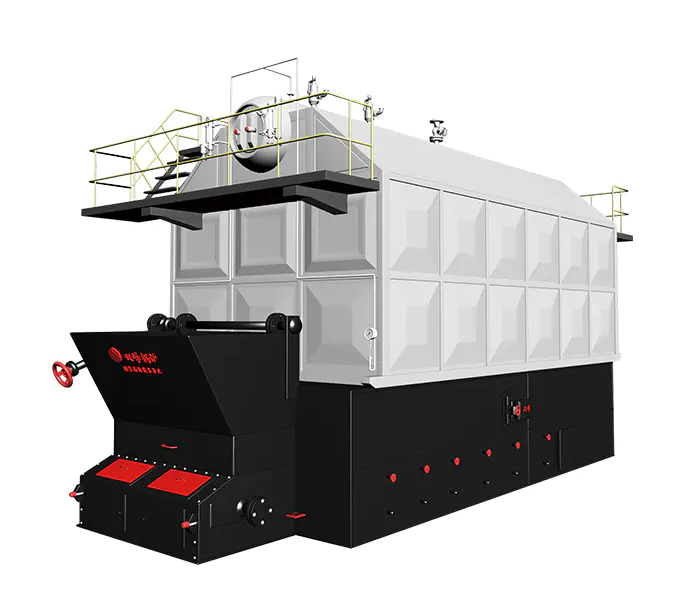
As industries face pressure to decarbonize, the Solid Fuel Steam Boiler is undergoing a transformation. By switching the fuel source from fossil coal to carbon-neutral biomass (wood pellets, agricultural residue, or nut shells), a boiler system can effectively reduce its net carbon footprint. The logic is simple: the carbon dioxide released during combustion is roughly equivalent to the CO2 absorbed by the plant during its growth, creating a closed carbon loop.
However, the sustainability of a Solid Fuel Steam Boiler depends heavily on the supply chain. A study of industrial applications in Southeast Asia highlights the potential of using "waste" products like bagasse (sugar cane residue) or palm shell waste. Instead of letting these materials decompose in the open (releasing methane), they are utilized as fuel. To maintain a "sustainable" profile, the system should achieve an efficiency of at least 80%. This requires precise control of excess air—too little air creates smoke (unburnt carbon, a waste product), while too much air cools the furnace and wastes heat.
The challenges facing a sustainable Solid Fuel Steam Boiler often lie in logistics. Unlike gas, solid biomass is not uniform. Rice husks have high silica content, which can damage traditional grates; wood chips vary in size. Therefore, modern sustainable boilers feature "fuel flexibility." They are designed to handle a range of moisture contents from 15% to 45%. While a gas boiler loses efficiency quickly with fuel changes, a robust solid fuel unit maintains steady output if the fuel mixing is controlled.
For industries aiming for certifications like LEED or ISO 14001, switching to a Solid Fuel Steam Boiler fueled by local waste wood offers "Scope 1" and "Scope 2" emission reductions. It eliminates reliance on fossil gas from pipelines (which leaks methane) and reduces landfill waste. The particulate matter emissions, a historic downside, are now managed through multi-cyclone filters and baghouses, capturing over 99% of fly ash. When the ash is returned to the forest as a nutrient-rich soil amendment, the entire steam generation cycle approaches a regenerative model.

 English
 French
 Spanish
 Portuguese
 Deutsch
 Turkish
 Dutch
Dutch
 Italiano
 Russian
 Romaian
 Portuguese (Brazil)
 Greek
Greek