
Are Decorative Door Films Good For Hotels?
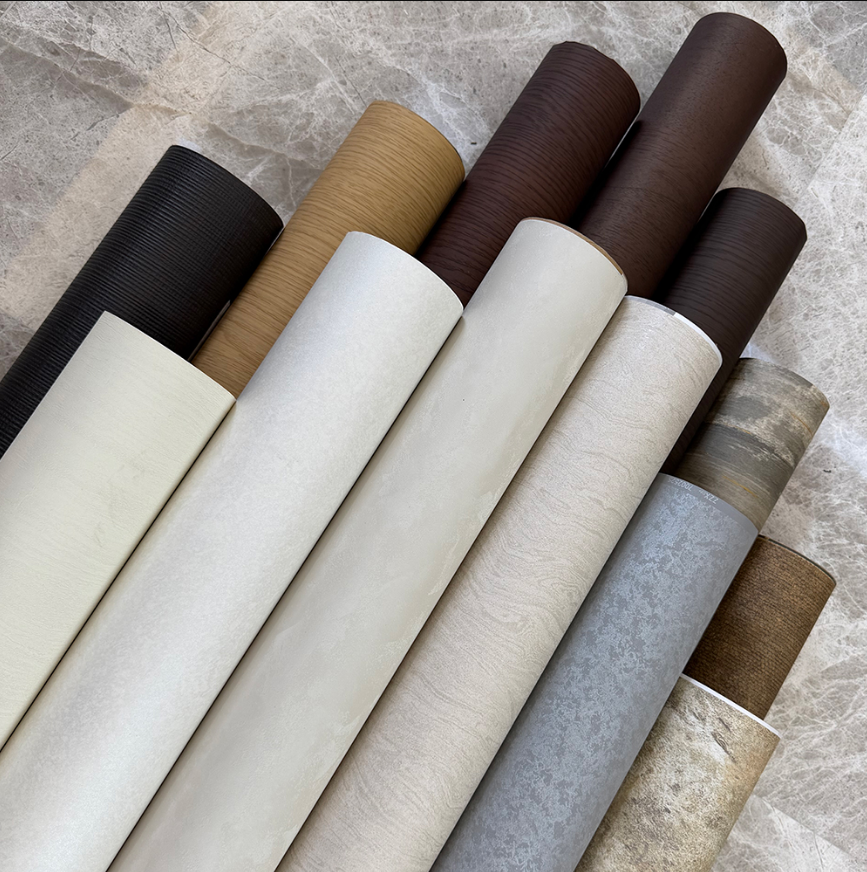
Large-scale commercial environments such as hotels, offices, hospitals, and shopping centers require door systems that maintain consistent appearance under heavy usage. Repainting or replacing doors frequently increases maintenance cost and operational disruption. Decorative film for doors offers a surface solution designed for fast installation, uniform aesthetics, and long-term durability.
Commercial Environment Requirements
Doors in commercial spaces experience significantly higher usage compared to residential settings. Common stress factors include:
Continuous hand contact
Cleaning chemicals
Impact from luggage or carts
Frequent opening cycles
Lighting exposure over long periods
To handle these conditions, decorative films must provide enhanced abrasion resistance, strong adhesion, and stable color performance.
Typical commercial-grade film parameters:
Thickness: 0.25 mm – 0.50 mm
Abrasion resistance: 800–2000 cycles Taber test
Temperature resistance: up to 80°C
Peel strength: above 4.0 N/cm after lamination
UV resistance: Grade 4 or higher
These specifications help ensure long service life in demanding environments.
Hotel Door Applications
Hotels require consistent interior aesthetics across hundreds or even thousands of rooms. Decorative film allows standardized door designs while reducing production variation.
Common hotel door styles using decorative film:
Wood grain warm tone finishes
Matte neutral color panels
Stone-texture corridor doors
Soft-touch modern designs
Vacuum membrane pressing is often used to wrap MDF door cores, creating seamless edges and uniform surface coverage. This eliminates visible joints and improves visual consistency.
Office and Corporate Use
Office environments prioritize modern aesthetics and easy maintenance.
Decorative film for doors supports:
Glass-alternative privacy panels
Minimalist flat color doors
Brand-color coordinated surfaces
Acoustic room door finishes
PET-based films are often used in executive spaces due to their high surface hardness and refined gloss control. PVC remains common for general office partitions and internal doors.
Installation and Production Efficiency
One major advantage of decorative film systems is reduced installation time compared to painting or veneering.
Industrial application methods include:
Vacuum pressing:
Temperature: 110–140°C
Pressure-controlled forming
3D surface coverage
Flat lamination:
Hot-melt adhesive bonding
Roll-to-panel processing
High-speed production lines
Profile wrapping:
Continuous edge covering
Suitable for frames and trims
Consistent grain alignment
These methods support mass production for commercial construction projects.
Surface Protection in Public Areas
Public environments require materials that resist frequent cleaning and abrasion.
Decorative film surfaces provide:
Moisture resistance for cleaning cycles
Chemical resistance against disinfectants
Scratch resistance for daily impact
Color stability under artificial lighting
Embossed textures also help hide minor wear patterns, maintaining visual quality over time.
Design Standardization Across Large Projects
One key advantage in commercial construction is the ability to maintain consistent design across multiple buildings.
Decorative film collections allow:
Uniform door appearance across floors
Matching wall panels and furniture
Coordinated corridor design systems
Controlled color batches for consistency
This level of standardization is difficult to achieve with natural wood materials due to grain variation.
Long-Term Maintenance Benefits
Maintenance teams in hotels and offices benefit from simplified cleaning procedures.
Recommended care practices:
Neutral detergent cleaning
Soft cloth wiping
Avoiding abrasive pads
Routine surface inspection
Edge sealing checks
Unlike painted surfaces, damaged film sections can sometimes be replaced without full door replacement, reducing operational downtime.
Future Direction in Commercial Door Films
Current development trends include:
Anti-fingerprint coatings for high-touch areas
Enhanced antibacterial surface layers
Low-gloss architectural finishes
Improved fire-rated formulations
Digital pattern customization for branding
These innovations are shaping decorative film for doors into a multifunctional architectural surface solution rather than a simple decorative layer.
 Portuguese
 English
 Arabic
 French
 Spanish
 Deutsch
 Turkish
 Dutch
Dutch
 Italiano
 Russian
 Romaian
 Portuguese (Brazil)
 Greek
Greek