
Are Magnetic Cubes Safe for Kids?
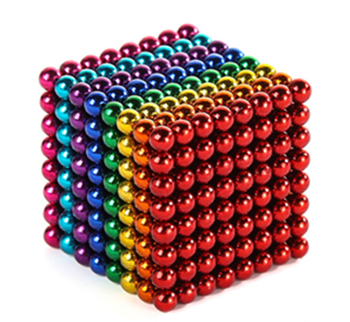
Safety engineering plays a central role in the design of Solid Color Magnetic Block Cubes, especially because they are intended for children’s use in both home and educational environments. The presence of internal magnets requires careful structural design to prevent exposure and ensure long-term durability.
The outer shell of each cube is typically made from ABS plastic, a material known for its high impact resistance and non-toxic properties. ABS is commonly used in children’s toys because it can withstand repeated drops and mechanical stress without cracking easily. Wall thickness is usually designed between 2.0 mm and 3.5 mm depending on intended usage intensity.
Inside each cube, neodymium magnets are fully enclosed using ultrasonic welding or heat-sealing techniques. This ensures that magnets remain fixed even under impact. The sealing process eliminates gaps where moisture or physical force could compromise internal components.
Solid Color Magnetic Block Cubes are designed with specific safety thresholds for magnetic force. While strong enough to support multi-layer structures, the attraction force is carefully controlled to allow easy separation by children. This balance reduces strain during play and prevents accidental pinching.
Drop resistance testing is commonly performed during quality assurance. Cubes are dropped from heights of approximately 1.2 meters onto hard surfaces to simulate real-world use conditions. Units must maintain structural integrity without magnet displacement or shell breakage.
Another important aspect is chemical safety. Materials are typically tested for BPA-free composition and compliance with global toy safety standards. This includes restrictions on heavy metals such as lead and cadmium.
In addition to physical safety, design considerations also address misuse scenarios. For example, cube edges are rounded to reduce sharp contact points. Internal reinforcement ribs help distribute impact force evenly across the structure.
Magnet safety is a particularly important topic in toy engineering. While neodymium magnets provide strong connectivity, they must be securely enclosed to prevent accidental ingestion hazards. Properly manufactured Solid Color Magnetic Block Cubes ensure magnets cannot be accessed without destructive force.
Manufacturers also conduct environmental resistance tests, including exposure to humidity and temperature variation. These tests ensure that magnets do not corrode and that plastic does not deform under typical storage conditions.
In educational or household settings, supervision guidelines are often recommended for younger users. Age labeling typically aligns with international standards indicating suitability for children above 3 years old, depending on design specifications.
Overall, safety in Solid Color Magnetic Block Cubes is achieved through a combination of material selection, structural engineering, magnetic calibration, and rigorous testing procedures.
 Dutch
Dutch
 English
 Arabic
 French
 Spanish
 Portuguese
 Deutsch
 Turkish
 Italiano
 Russian
 Romaian
 Portuguese (Brazil)
 Greek
Greek