
Is Tri Laminate Polystyrene Good for Automation?
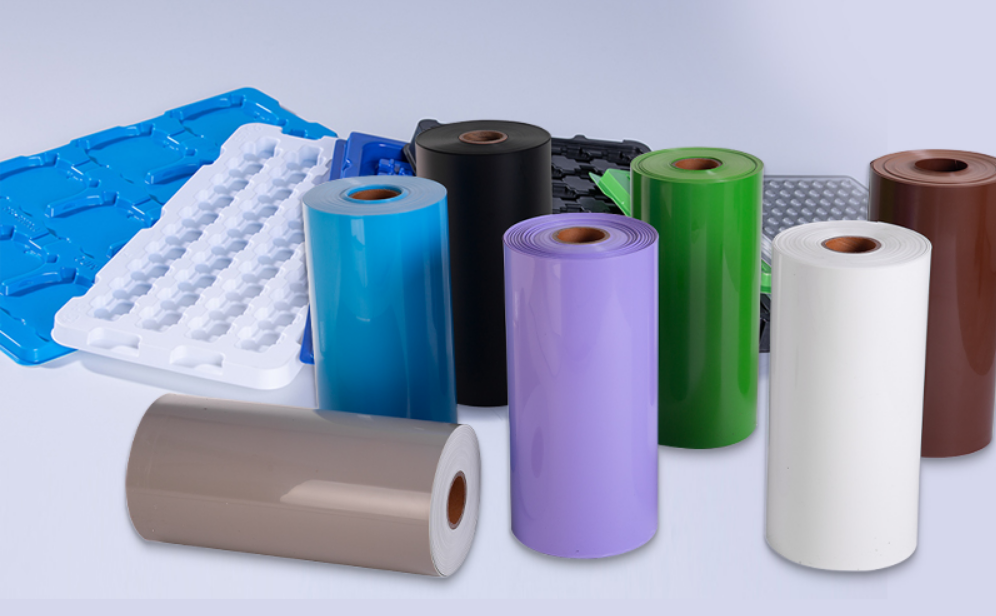
Automation has become a defining feature of modern electronics manufacturing. Robotic arms, conveyor systems, and automated storage units all rely on precise handling of components. In such environments, electrostatic discharge can cause unpredictable failures, making material selection for trays and carriers essential. One engineered solution is tri laminate conductive black polystyrene, designed specifically for automated production and handling systems.
This material integrates conductive properties directly into a layered thermoplastic structure, ensuring both electrical control and mechanical reliability under repetitive machine operation.
Automation-driven material requirements
Automated systems require packaging materials with:
Consistent dimensions for robotic gripping
Stable surface friction characteristics
Predictable stacking behavior
ESD-safe electrical performance
Resistance to repeated cycling
Single-layer materials often fail to meet all requirements simultaneously, which is why multilayer conductive polystyrene structures are used.
Electrical performance for robotic environments
Robotic handling increases friction points between trays, conveyors, and end-effectors. These interactions generate static charges.
Conductive black polystyrene mitigates this through:
Carbon black conductive pathways
Continuous charge dissipation
Controlled resistance levels
Typical electrical specifications:
Surface resistance: 10⁴ – 10⁸ Ω/sq
Volume resistivity: adjustable via formulation
Permanent conductivity without surface coatings
These characteristics help prevent electrostatic buildup during high-speed automation cycles.
Structural design for repeated cycles
Automation requires materials that can withstand thousands of handling cycles without deformation.
The tri-laminate structure improves durability:
Top layer:
Reduces surface wear from robotic grippers
Middle layer:
Maintains conductive consistency
Bottom layer:
Provides rigidity for conveyor alignment
This separation of functions improves long-term stability compared to single-material sheets.
Thermoforming adaptability
Tri-laminate conductive polystyrene is widely used in thermoformed automation trays.
Processing parameters:
Heating range: 140°C – 180°C
Forming pressure: vacuum or matched die systems
Cooling: controlled to prevent warping
Sheet thickness: 0.5 mm to 3.0 mm
After forming, trays retain both structural geometry and conductive performance.
Dimensional accuracy in production
Automation systems require precise tray geometry:
Component pocket tolerance control
Consistent stacking height
Alignment accuracy for pick-and-place systems
Even small dimensional deviations can disrupt production efficiency, making material stability critical.
Industrial usage scenarios
Common applications include:
SMT component feeders
PCB robotic assembly trays
Semiconductor wafer handling systems
Battery module automation lines
Optical sensor assembly transport
Each environment depends on predictable mechanical and electrical behavior.
Conclusion
The use of tri laminate conductive black polystyrene supports the growing demand for automation-ready packaging systems. Its layered structure ensures stable electrostatic discharge control while maintaining dimensional precision required for robotics. Combined with thermoforming flexibility and mechanical resilience, it fits well into modern automated electronics production environments where consistency and reliability are essential.

 English
 Arabic
 French
 Spanish
 Portuguese
 Deutsch
 Dutch
Dutch
 Italiano
 Russian
 Romaian
 Portuguese (Brazil)
 Greek
Greek